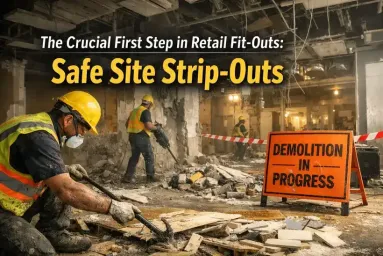
The Crucial First Step in Retail Fit-Outs: Safe Site Strip-Outs
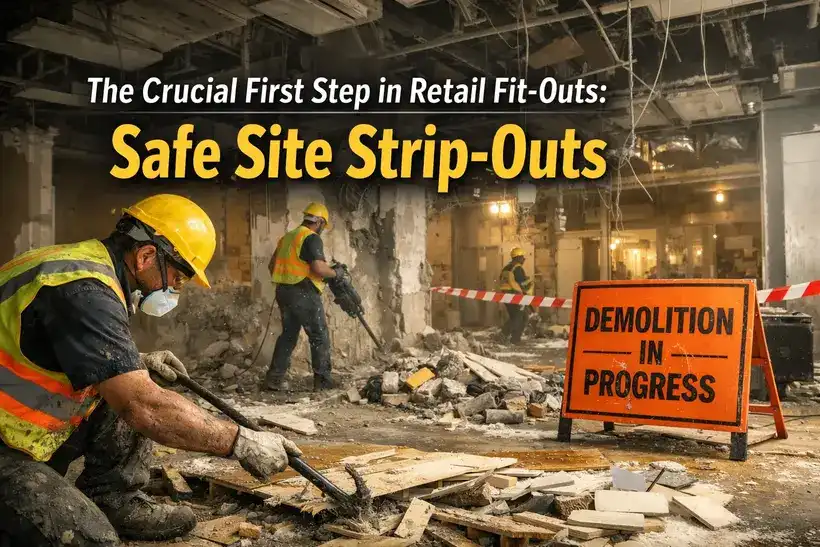
Skipping the strip-out phase in a retail fit-out is one of the most expensive mistakes a business owner can make. Before a single shelving unit goes up or a single tile gets laid, the old commercial space must be safely and methodically cleared down to its structural shell. This process, known as a site strip-out or soft strip demolition, is not just a housekeeping task. It is the foundation on which every element of your new retail environment is built. Get it wrong, and you risk project delays, regulatory fines, hidden structural damage, and spiralling renovation costs.
What Is a Retail Site Strip-Out?
A site strip-out involves removing all non-structural interior components from a commercial space while leaving the building's core framework intact. It means clearing out everything except the bones of the building, taking out internal fittings and fixtures like doors, windows, ceiling panels, flooring, and partitions, leaving only the structural framework behind.
This is fundamentally different from full structural demolition. Strip-out differs from full structural demolition because it typically focuses on non-load-bearing components. However, even non-structural elements must be removed carefully to avoid damaging walls, floors, or shared infrastructure.
For retail spaces, this typically means clearing out display fixtures, old shelving systems, carpeting and tiles, dropped ceilings, internal partitions, outdated lighting rigs, and redundant electrical cabling. Soft stripping for retail includes removal of all retail flooring such as carpet, wood, and ceramic, as well as fixtures and fittings, non-structural wall removal, and racking disassembly and reassembly.
The result is a clean, empty shell that gives fit-out contractors a controlled and safe environment to work with. Think of it as pressing the reset button on a commercial interior before you design and build something new.
Why a Professional Strip-Out Matters Before Fit-Out Work Begins
Many business owners view the strip-out as a cost centre rather than a value driver. This is a costly perspective. Fit-outs require significant preliminary work to ensure the site is safe and regulations are met. This includes an in-depth health and safety assessment, notifying local authorities if needed, and taking all relevant precautions to ensure the safety of both workers and clients throughout the fit-out process.
Attempting to rush the clearing phase or worse, handing it to unqualified labour, often results in damage to the building's plumbing, electrical systems, or structural supports. This damage only becomes apparent once fit-out work begins, forcing costly rework and blowing out timelines.
Before installing custom shelving or modern lighting, hiring a certified team for Commercial Demolition Melbourne ensures the site is safely stripped back to its structural shell. Licensed demolition contractors understand how to isolate and disconnect live utilities, contain hazardous materials, and protect adjacent tenancies, all of which are non-negotiable steps in any compliant strip-out.
Professional contractors are trained to complete projects quickly and within deadlines, reducing downtime. Licensed and insured contractors know how to handle hazardous materials safely and in line with local regulations. Experienced contractors also avoid costly mistakes, protect structural elements, and reduce the chance of unexpected repair costs.
The Hidden Danger: Hazardous Materials in Older Retail Spaces
One of the most important and most overlooked reasons to engage professionals for your strip-out is the very real risk of hazardous materials hiding within older commercial buildings. Commercial, industrial, and multi-family buildings about to undergo major renovations commonly contain hazardous materials, such as asbestos, lead, mercury-containing devices, Freon, PCBs, or others, present in various building materials, painted surface coatings, and mechanical equipment.
Asbestos is the most prevalent concern in retail spaces built before 1990. It was once widely used in floor adhesives, ceiling tiles, pipe insulation, and wall linings. When these materials are disturbed even during routine strip-out activities, they release microscopic fibres into the air that cause serious long-term health damage, including mesothelioma and lung cancer.
If left intact during renovations, hazardous materials can pose inhalation, ingestion, and dermal hazards that significantly risk human health and the environment. These materials must be identified and managed properly to mitigate accidental human exposure and prevent project delays.
Environmental testing is essential and should be scheduled before renovation or demolition work begins. Ideally, this testing occurs during the initial planning stages of the project, allowing enough time to evaluate the results, design a safe work plan, and complete any necessary abatement without delaying construction.
A certified strip-out contractor will conduct pre-demolition hazardous material surveys as a standard part of their service. If asbestos or lead paint is found, they manage removal and disposal through licensed abatement processes that meet all regulatory requirements before fit-out work begins.
The Step-by-Step Strip-Out Process for Retail Spaces
Understanding what a professional strip-out involves helps you plan your timeline and budget accurately. The process typically follows a clear sequence.
Site Assessment and Planning
Every professional strip-out starts with a thorough site inspection. The primary objective is to identify, quantify, and plan for the safe removal or encapsulation of all hazardous substances before demolition or construction begins, ensuring a safe environment and a predictable project path.
The assessment covers the condition of existing fixtures, the presence of shared building services (such as sprinkler systems or HVAC ducting that feeds adjacent tenancies), and the structural elements that must not be disturbed. This step produces a detailed scope of work and a risk management plan.
Utility Isolation and Disconnection
Before any physical removal begins, all electrical circuits, gas lines, and water connections serving the space must be properly isolated. All electrical works must be carried out by licensed professionals, and in some commercial leases, power needs to be restored to a certain base standard. Improper HVAC strip-outs can also trigger noise complaints, airflow issues, or even compliance breaches for neighbouring tenants.
This stage also involves coordinating with building management if the retail space sits within a shopping centre or mixed-use building. Shared mechanical systems require special care to avoid disrupting other occupants.
Physical Strip-Out and Demolition
With utilities safely disconnected, the physical strip-out can begin. Crews systematically remove flooring, ceiling panels, partitions, joinery, and all installed fixtures. Interior strip-outs remove all non-structural elements such as walls, flooring, ceilings, cabinetry, mechanical systems, and interior finishes, while preserving the building's core structure.
Skilled crews work methodically to avoid damaging the surfaces and systems that will remain in place. For example, removing display shelving that is fixed to walls requires controlled dismantling techniques to prevent surface damage that would require expensive repair before the new fit-out can proceed.
Waste Sorting and Responsible Disposal
A compliant strip-out generates significant volumes of mixed waste materials. Commercial strip-outs generate significant waste, including metal framing, timber, plasterboard, glass, and cabling. Responsible contractors sort materials for recycling wherever possible, reducing environmental impact.
In multi-level retail environments, debris removal requires coordination with building management to use service lifts and loading zones, keeping the process orderly and minimising disruption to nearby businesses. Hazardous materials like asbestos-containing waste must be transported and disposed of separately using licensed carriers who document the entire chain of custody.
What Good Looks Like: Choosing the Right Strip-Out Partner
Unexpected issues like the discovery of hazardous materials, the need to level a subfloor, or upgrades required to meet current building codes can add high costs to any fitout project. The right strip-out contractor identifies these issues before they become expensive surprises, not after.
When evaluating contractors, look for the following attributes:
Full licensing and insurance. A certified demolition contractor carries both public liability insurance and contractor's all-risk cover. They also hold the relevant licences for asbestos removal and hazardous waste handling if required by your state.
Documented safety plans. A professional contractor provides site-specific safe work method statements (SWMS) before work begins, not after. These documents outline how each task will be performed safely, what personal protective equipment will be used, and how risks will be managed.
Transparent quoting. The scope of a strip-out can change once work is underway; hidden services, unexpected wall constructions, or undisclosed hazardous materials can all affect cost. A good contractor communicates these changes promptly and works with you to manage scope adjustments without derailing your timeline.
Waste management credentials. Ask how stripped materials are sorted and disposed of. Contractors with strong environmental practices sort materials for recycling, reducing landfill volumes, and in some cases, reducing your overall disposal cost.
The Financial Case for Doing It Right the First Time
In Australia, commercial fit-out costs typically range from $500 to $2,000 per square metre, depending on the type of space and scope of works. On a 200-square-metre retail floor, that represents an investment of between $100,000 and $400,000 or more. Protecting that investment begins with the strip-out.
A poorly executed strip-out can compromise the structural surfaces on which new flooring, joinery, and wall finishes are installed. It can leave behind undiscovered hazardous materials that trigger mandatory stop-work orders mid-fit-out. It can damage shared building services that lead to expensive rectification work and fractious relationships with building management.
A full abatement completed upfront saves over the project span in both money and headaches. Leaving live building systems entombed with asbestos or other hazardous materials can delay or complicate the renovation, or impede ordinarily quick maintenance projects in the future.
Business owners who invest in a certified strip-out at the start are protecting every dollar spent on the fit-out that follows. They are also protecting the workers who carry out that fit-out and the customers who will eventually fill the finished store.
Timeline Expectations for a Retail Strip-Out
Retailers often underestimate how long a compliant strip-out takes. Rushing this phase to compress the overall project schedule is a false economy.
For a mid-sized retail tenancy of 150–300 square metres, a thorough strip-out typically takes between three and ten working days, depending on the complexity of the existing fitout, the presence of hazardous materials, and the logistics of working within a shared building. If asbestos is discovered and requires licensed removal and air clearance testing, additional time must be built in before fit-out works can start.
Planning proactively and scheduling structural and site-clearing work to be completed before any other major renovation tasks is essential. Addressing foundational or site preparation issues after interior work has started can lead to rework and exponentially higher costs.
Factor the strip-out into your project programme from the very beginning. Treating it as a discrete, fully resourced project phase, rather than a quick preliminary task, will produce a cleaner, safer, and more cost-efficient fit-out overall.
Conclusion
A retail fit-out is a significant investment in your brand, your customer experience, and your business operations. Its success depends entirely on the quality of what happens before a single new fixture is installed.
A safe, compliant, and professionally executed site strip-out clears the way for everything that follows, eliminating hazardous materials, protecting the building's structure, and giving fit-out contractors the clean canvas they need to deliver exceptional results. Skipping this step, or cutting corners on who performs it, creates risks that compound all the way through to opening day. Start your fit-out the right way by putting the strip-out first.